Attachment theory and its clinical applications
Introduction
Attachment theory has revolutionized the understanding of socio-emotional development and clinical practice. It is a paradigm rooted in psychoanalysis, although it proposes significant changes to some of its theoretical principles. It respects fundamental concepts and discoveries of psychoanalysis, such as the unconscious, defence mechanisms, and transference and countertransference processes, but conceptualizes them from a new perspective and a new way of understanding normal development and psychopathology.
Attachment theory replaces the Freudian drive or instinct model with a new framework in which the need to establish and maintain specific and lasting emotional bonds with other human beings takes centre stage. The basic function of attachment is protection and care, which, due to its fundamental importance in development, occupies a privileged place with respect to other basic motivational systems. Instead of talking about “instincts” or “drives” (bott terms have been use with the same or similar meaning), we now talk about “motivation”.
In recent decades, this perspective has led to a rethinking of the psyche as functioning through motivational systems (or modules, in the terminology of some authors) that are relatively independent of one another, with different properties and processes, but in coordination with other motivational systems (i. e. Lichtenberg 1989; Bleichmar, 1997, Diamond and Marrone 2003). Each system processes certain types of stimuli and automatically disregards others (Diamond & Marrone, 2003).
These ideas have been supported by neuroscience research that validates the existence of complex neural systems that process different motivational forces (see, for example, Schore, 2012 and Panksepp,1998-2004). In fact, one of the characteristics of attachment theory is that, beyond its psychoanalytic basis, it is interdisciplinary in both its theoretical foundations and its applications. Indeed, attachment theory can be applied to individual psychoanalytic therapy, psychodrama, group analysis, Gestalt therapy, systemic therapy, multifamily (or interfamily) therapy, and so on (see, for example, Cortina & Marrone, 2017). Attachment theory is highly compatible with relational psychoanalysis. However, we still need to make a distinction between attachment theory itself and the theory and technique of attachment-based psychotherapeutic processes and technique.

A project with solid foundations and a change in basic assumptions
John Bowlby and Mary Ainsworth, the two founders of attachment theory, took enormous care in constructing the theory with impeccable theoretical rigor and in clearly defining the concepts so that they could be empirically tested (Bowlby, 1998; Ainsworth, 1991). In this joint effort, John Bowlby was the theoretical genius and Mary Ainsworth the empirical genius and an exceptionally talented researcher. One of the characteristics of authors within the attachment theory framework is that they clearly explain their empirical foundations (Cortina & Marrone, 2017). This style contrasts with that of many other authors in the world of psychotherapy who write in a very abstract, often unintelligible and axiomatic way.
Traditionally, psychoanalysis has been a discipline that has relied on clinical experience with a limited number of patients and has not incorporated the contributions that empirical research with broad sectors of the population can offer. In contrast, attachment theory is based not only on clinical observations but also on longitudinal studies with large populations, often not classified as clinical.
In the case of attachment theory, the paradigm shift arises as a new way to understand and conceptualize the functions of affectional bonds between parents and children and in adult attachment relationships, how to understand the emotional and motivational components of these bonds, and how to visualize the possible effects they will have on development (Juri, 2011). As Kuhn points out, paradigm shifts create resistance but also an explosion of knowledge and new avenues of research. Juri notes that a new way of conceptualizing observations is often accompanied by a new language.
Bowlby and Ainsworth demonstrated the fallacy of a tendency within psychoanalysis: its theoretical and clinical elaborations based on the idea that unconscious fantasies (not actual interpersonal experiences) shape and govern the psyche. According to the Kleinian model (see, for example, Isaacs, 1952), highly influential in the London psychoanalytic community where Bowlby trained, people's unconscious lives and autobiographical narratives were dominated by unconscious fantasies that bear poor no resemblance to what actually happened. Therefore, in psychotherapy, the therapist must discard the patient's accounts of their early history. These ideas are based on Freud's shift in position.
Freud had proposed what is known as the "seduction theory," which explained the origin of neuroses by attributing them to experiences of sexual abuse in childhood. Later, he changed his explanation, stating that he found the cause of mental illness not so much in real events as in the fantasies (that is, the imagination) of his patients. In this way, Freud came to believe that his patients' accounts were based on fantasies that stemmed from unconscious desires. He abandoned his seduction theory and replaced it with the concept of unconscious fantasy, asserting that the accounts of sexual abuse that filled his practice were the product of his patients' incestuous desires and not of real events they had experienced. He thus proposed the concept of psychic reality, an internal reality that does not correspond to lived experiences. In 1897, he wrote to Fliess saying that he no longer believed the traumas to which his patients referred were real. Bowlby (personal communication) often stated that this change of ideas by Freud was tragic for psychoanalysis and psychotherapy.
During the 1980s, as studies on child sexual abuse expanded, the idea of "seduction fantasies" began to be questioned, with the argument that they concealed real cases of abuse. Psychoanalytic theories were thus accused of trying to make the actual sexual abuse invisible or irrelevant. Jeffrey Masson (1984), then director of the Sigmund Freud Archives (United States), examining the complete correspondence between Freud and Fliess, challenged the official psychoanalytic scheme. There are two versions to explain this apparent shift in Freud's perspective. One is that Freud believed the patients told the truth about the sexual abuse they suffered in their childhood, but that he later abandoned this theory out of cowardice, to be accepted by the institutional world of medicine, which did not believe in child abuse and neglect. Another version is that Freud's writings on his seduction theory were censored by influential psychoanalysts residing in the United States (Heinz Hartmann, Ernst Kris, and Rudolph Loewenstein) in the first edition when they were published in 1950.
Whatever how valid one of these explanations may be, there are two facts we must consider in this debate. The first is that today almost no one doubts that sexual abuse, child maltreatment, and trauma exist and that they have devastating consequences for mental health. The second is that, despite this acknowledgement, many psychoanalysts still base their analytical and therapeutic intervention techniques on the assumption that there is a “psychic reality” that is more important than actual experiences in the psychological dynamics of individuals and the development of personality.
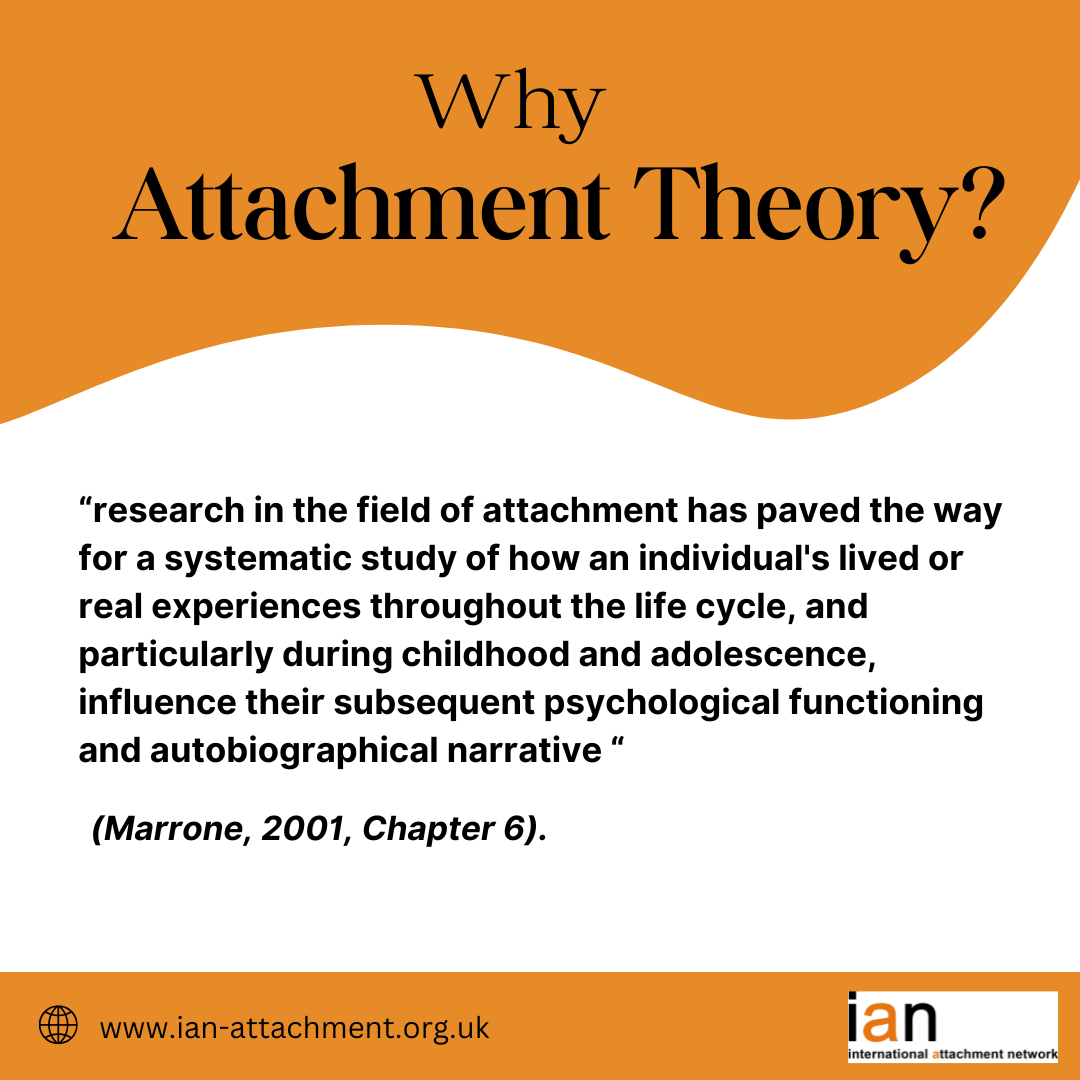
Years later, research in the field of attachment has paved the way for a systematic study of how an individual's lived or real experiences throughout the life cycle, and particularly during childhood and adolescence, influence their subsequent psychological functioning and autobiographical narrative (Marrone, 2001, Chapter 6).
Bowlby (1984) believed that an individual is more likely to be unable to recall painful or traumatic events from their childhood than to invent episodes that did not occur. Within the context of attachment theory, the intrapsychic world and fantasies of infants and children are an elaboration of their experience with their primary caregivers, not its cause.
Attachment theory has fostered a movement from a one-person psychology (focused on the individual's intrapsychic life) to a two-person psychology (focused on dyadic relationships), a three-person psychology (exploring the triangle father-mother-child) and later to a multi-person psychology. For this reason, Bowlby maintained a constant dialogue with systemic family therapists and group analysts. According to the tradition of group psychotherapy (Foulkes, Moreno), the individual is a nodal point in a network of group interactions. This leads to a new movement, this time from two-person and three-person psychology to multi-person psychology. Simply put, we cannot understand the individual without considering the functioning of the family group in which they grew up and are embedded. Furthermore, this understanding must also consider the socio-cultural and socio-political context. Multi-person psychology is incompatible with a one-person psychology that explains psychic and behavioural processes primarily as the result of purely or fundamentally endogenous phenomena. The genius of the great pioneers of group psychotherapy (Moreno in the field of psychodrama and Foulkes in the field of group analysis) lay in the fact that, beyond creating group methods of therapeutic intervention, they proposed a multi-person model of the psyche, intuitively anticipating later scientific developments (see Diamond & Marrone, 2003).
The representational world: internal working models
From early childhood, each individual progressively organizes internal representations of the most important aspects of the relationships they establish with their attachment figures. The concept of internal working models, developed by Bowlby, is a central point of attachment theory (Bowlby, 1973; Marrone, 2001, 2014; Peterfreund, 1983; Rozenel, 2006). Internal working models are cognitive maps, representations, schemas, or scripts that an individual constructs of themselves (as a unique physical and psychological entity), their attachment figures, and the relationship between them.
Internal working models comprise two defining aspects:
1- the representation of the attachment figure as someone who will (or will not) respond to requests for support and protection, and
2- the representation of oneself as someone deserving (or not) receiving that support or quality of care.
Internal working models are built from repeated experiences, through which the child develops expectations of his/her relationships. In turn, these models or mental representations are generalized, guiding and shaping interaction with others. Self-esteem, or self-worth, is constructed within this intersubjective equation, with these primary relational ingredients, in continuous reshaping. Trust in others also depends on these models. Bowlby (1988) posits that, for infants to continue feeling secure and functioning appropriately for their age, the complementary internal working models of both children and parents must adapt to the development of their physical, social, and cognitive abilities. In this way, the interaction between the child and their caregivers has a direct impact on brain development and the process of neuronal maturation (Shore, 2001).
It could be said that one of the fundamental tasks of any therapeutic process is to elicit, explore, review, update, and integrate an individual's internal working models, including, fundamentally, those that are unconscious, which are revealed through free association and other access methods. In fact, one of Freud's brilliant contributions was discovering that free association in therapy is a method of weaving together, at a preconscious level, ideas, memories, desires, and emotions to uncover hidden meanings. Free association is facilitated by the therapist's guidance. Free association in individual psychoanalytic psychotherapy is fundamental, although it needs to be understood as an exploratory process facilitated by the patient-therapist interaction.
Internal working models are associated with emotional states. In psychoanalytic terms, the attempt to regulate these emotional states leads an individual to try to manage them with defence mechanisms. It also generates strategies to maintain optimal distance to the attachment figure.
Bowlby (1973, page 205) explains, “It is not uncommon for an individual to operate simultaneously with two or more working models of their attachment figures and two or more working models of themselves.” This leads us to discover that we all have multiple models of our relationship with each attachment figure. This multiplicity is due to various factors that come into play throughout the development of each relationship, from early childhood and throughout the life cycle, even though it is established that the earliest internal working models are the most influential.
Emotional regulation.
Individuals with a history of optimal attachment relationships tend to have an effective and direct way of regulating their emotions. Based on numerous childhood experiences with their attachment figures, who in most cases responded empathetically, sensitively, and effectively to communications of danger, anxiety or distress, they learn to trust the regulatory capacity of others. They trust their attachment figures, so it is not difficult for them to express their vulnerability and ask for help when they need it. In contrast, in adverse childhood conditions, upon reaching later stages of the life cycle, there is a failure in the capacity for self-regulation or to seek regulation from other human beings. In adverse circumstances, instead of seeking help, they will resort to dysfunctional and unhealthy ways of obtaining some control over their emotional states.
All human beings need close people to regulate them emotionally when they are dysregulated. If we had attachment figures who regulated us in childhood, we will internalize that function, resulting in greater autonomy in regulating our emotions without much help from others. Even so, in situations of high adversity in life, people with a history of optimal attachment need external help; but they know how to seek it.
A problem that often arises in clinical practice is that of people who, in their childhood, needed to be regulated by the same attachment figures (their caregivers) who were the ones who dysregulated them. The same can happen to them in their current life with their partner. The result, inevitably, is trauma and dissociation. A competent therapist needs to understand these processes.
On Memory
Internal working models constitute networks of hierarchically organized and interrelated schemas. They represent a set of information related to attachment, stored in episodic, semantic, and/or procedural memories. Understanding the complexity of how experiences are inscribed in different types of memory can be very helpful for therapeutic work. So-called semantic memory is an organization of conscious memories based on family interactions in which parents imposed the “official version” of events and their meanings. Episodic memory, instead, is based on past scenes, located in time and space, directly experienced by the subject without intermediate assignation of meaning.
Procedural memory is a non-declarative, automatic memory that forms the basis of what is known as “relational implicit knowledge.” It is a memory that is activated through non-verbal means, particularly movement, and that is modified through reparative actions. The modification of implicit relational knowledge occurs through the therapeutic encounter. This clinical phenomenon has been proposed by the Boston School of Change Processes (Lyons-Ruth, 1999; Stern, 2004).
Bowlby believed that eliciting episodic memories and associated emotions was crucial to achieve good results in the therapeutic process. He also thought that an empathic attitude on the part of the therapist tend to foster cooperation in the therapeutic relationship. In turn, a good relationship may contribute to obtaining changes at the level of relational implicit knowledge.
Representational Constellations
I have developed the concept of “representational constellation” to name the resulting combination of (a) one’s internal working model of the self, (b) the internal working model of the attachment figure, (c) the associated emotions, and (d) the strategies the individual uses to regulate distance in the relationship. If the emotions are painful, the constellation would include the associated defence mechanisms. These constellations are multiple and can remain dormant until an event reactivates the associated emotion. At that point, the internal working models, defences, and strategies are also reactivated, leading to mood changes. Representational constellations are like computer programs, activated by a click of the mouse. That click is always a recent interpersonal event that reactivates constellations formed during past events. We will better understand this concept if we consider that Bowlby described the psychic apparatus as a control system, that is, as a cybernetic system. Therefore, there are subsystems that become dormant or reactivated depending on the triggers that occur.
For example, a patient of mine, whom I will call Luisa, begins a session by saying that she doesn't understand why her mood suddenly changed as she was walking down the street to her session. She had been feeling relatively cheerful, but suddenly sadness overwhelmed her. This mood change was probably due to a trigger that she hadn't noticed. I ask her what happened in the moments leading up to this mood change. Luisa says that the only thing she can think of is that she saw a little girl on the street with her mother, who was hugging her teddy bear. Then I suggest that she let herself be guided by her free associations. She recalls a scene from her childhood. She had a teddy bear she loved very much, and one day her mother abruptly and suddenly took it away from her and throw it into the rubbish bin, claiming it was old and dirty.
From that scene unfolds a story of neglect, lack of affection, and emotional deprivation in her childhood. A constellation of representations has been reactivated: the operational model of an emotionally deprived child, the operational model of a mother without empathy, and feelings associated with these models, including sadness, loneliness, anger, and vulnerability. Luisa cries a lot when she remembers that episode.
Catharsis in psychotherapy is a phenomenon initially studied in psychoanalysis by Breuer and Freud, who attributed a therapeutic effect to it (see Breuer & Freud, 1974). Many subsequent developments in psychoanalysis diminished the importance of this effect. However, within the context of attachment theory, catharsis results from reactivating episodic memories of attachment situations along with the emotions associated with these memories. It doesn't always occur in therapy sessions. But when it does, it has a fundamental therapeutic effect. It not only allows for the expression of repressed or hidden emotions but also elicits an empathic response from the therapist, thus providing a corrective emotional experience, to use the concept formulated by Franz Alexander (1961). Luisa had parents who treated her tears with disdain. The fact that the therapist listened to her attentively and empathetically allowed her to update her internal working models.
Thus, we explored Luisa's internal working models in the context of her childhood memories. I believe that free association is a fundamental part of the psychoanalytic process. It occurs at a preconscious level. It is a procedure by which the patient weaves together ideas, memories, and feelings to make sense of what is happening to them at that moment. Association is part of the analytic dialogue. The therapist participates by offering guidance to the patient in their process of self-discovery. However, the therapist guided by attachment theory does something more. Bowlby called it “informed inquiry” (Marrone, 2009, p. 141). What does this mean? It means that the therapist guides the patient in their free associations to recall traumatic or adverse episodes from their childhood or adolescence. The therapist facilitates this inquiry based on the information they have about the patient's personal history and what typically occurs in situations of relational trauma and family dysfunction.