
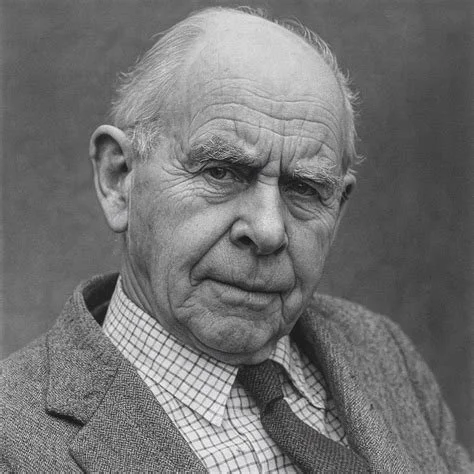
John Bowlby and Attachment Theory
John Bowlby (1907–1990) was a British psychiatrist and psychoanalyst who developed attachment theory, transforming understanding of the importance of close emotional relationships in human development.
Drawing on psychoanalysis, ethology, evolutionary thinking and observations of children separated from their caregivers, Bowlby proposed that the need to seek proximity to protective attachment figures is part of an evolved behavioural system. His work challenged some established psychoanalytic ideas of his time and placed relationships, separation, loss and the need for emotional security at the centre of human development.
Bowlby’s ideas were subsequently developed through the observational research of Mary Ainsworth and have continued to evolve through decades of research across developmental psychology, psychotherapy, neuroscience and related fields.
Today, attachment theory extends far beyond Bowlby’s original formulations. Contemporary attachment research continues to examine how attachment relationships contribute to emotional development, relationships and psychological wellbeing across the lifespan.
Who Was John Bowlby?
John Bowlby was born in London in 1907 and trained in medicine, psychiatry and psychoanalysis. His clinical work with children and families led him to become increasingly interested in the effects of separation, loss and disruption in children's relationships with their caregivers.
Bowlby worked at the Tavistock Clinic in London, where he became a leading figure in the study of children's emotional development and family relationships. Following the Second World War, his work for the World Health Organization (WHO) resulted in the influential 1951 report Maternal Care and Mental Health, which examined the importance of children's relationships with their primary caregivers and the potential consequences of prolonged separation.
Bowlby's thinking developed at a time when psychoanalytic theories were highly influential in understanding children's emotional lives. While trained within this tradition, he increasingly looked beyond psychoanalysis, drawing on fields including ethology, evolutionary biology, developmental psychology and systems thinking to develop a new account of why children seek closeness to caregivers, particularly when frightened, distressed or vulnerable.
This interdisciplinary approach became the foundation of what we now know as attachment theory.
How Did John Bowlby Develop Attachment Theory?
Bowlby developed attachment theory through a combination of clinical observation and ideas drawn from several different scientific traditions. Rather than viewing a child’s emotional bond with a caregiver simply as a consequence of feeding or dependency, he proposed that seeking closeness to a protective caregiver has an important biological function.
A major influence on Bowlby’s thinking came from ethology which is the scientific study of animal behaviour. The work of researchers such as Konrad Lorenz and Niko Tinbergen helped demonstrate how patterns of behaviour could have evolved because they contributed to survival.
Bowlby applied evolutionary thinking to the relationship between infants and caregivers. He proposed that behaviours such as crying, clinging, following and seeking proximity help maintain access to a protective attachment figure, particularly when a child experiences fear, distress, illness or separation.
This led to the concept of the attachment behavioural system: an evolved system that helps regulate proximity to an attachment figure in response to perceived threat or need for protection.
Bowlby also drew on control systems theory, developmental psychology and his clinical experience. Together, these influences allowed him to develop an account of attachment that connected emotional relationships with observable behaviour, development and evolutionary processes.
His ideas would subsequently be tested and significantly extended through the observational research of Mary Ainsworth and later generations of attachment researchers.
John Bowlby’s Key Ideas in Attachment Theory
Bowlby’s work introduced a number of concepts that became central to attachment theory. Together, they provided a framework for understanding how human beings seek protection and emotional security through close relationships, while also developing the confidence to explore the world.
-
Bowlby proposed that attachment is organised through an evolved behavioural system. When a child experiences fear, distress, illness, separation or perceived danger, attachment behaviours are activated and the child is motivated to seek proximity to an attachment figure.
When sufficient safety is restored, attachment behaviour can become less prominent, allowing attention to return to exploration, play and other activities.
-
A central idea in attachment theory is the secure base. An available and responsive attachment figure can provide the security from which a child is able to explore their environment, develop independence and return for reassurance when needed.
This relationship between attachment and exploration was an important part of Bowlby’s understanding of development and was subsequently elaborated through Mary Ainsworth’s observational research.
-
Bowlby proposed that experiences within attachment relationships contribute to the development of internal working models — expectations and representations concerning the self, other people and relationships.
These models help individuals anticipate whether others are likely to be available and responsive when needed and influence how attachment-related experiences are understood.
Bowlby regarded working models as capable of continuity over time, but they should not be understood as permanently fixed. Later relationships and experiences can contribute to their revision and development.
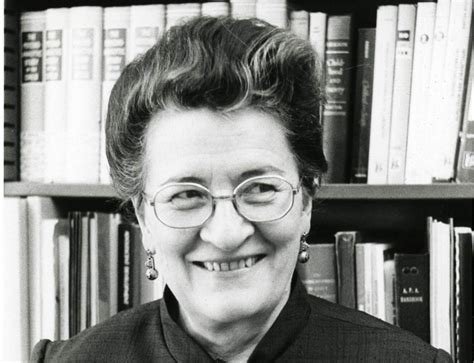
Mary Ainsworth and the Development of Attachment Theory
Although John Bowlby developed the theoretical foundations of attachment theory, the work of developmental psychologist Mary Ainsworth was crucial to its empirical development.
Ainsworth worked with Bowlby at the Tavistock Clinic before undertaking observational research into relationships between infants and their caregivers. Her studies helped demonstrate how differences in caregiver responsiveness and the organisation of attachment behaviour could be investigated systematically.
Ainsworth and her colleagues later developed the Strange Situation Procedure, a structured observational method designed to examine patterns of attachment behaviour in young children during episodes of separation and reunion with a caregiver.
This research contributed to the identification of patterns commonly described as secure, avoidant and resistant/ambivalent attachment. Subsequent research by other attachment researchers further developed this work, including the later identification and study of disorganised attachment.
The collaboration and intellectual exchange between Bowlby and Ainsworth therefore helped establish attachment theory as both a theoretical framework and a field of empirical research.
Their work provided foundations for a much larger body of attachment research that has continued to develop across infancy, childhood, adolescence and adulthood.
John Bowlby’s Attachment and Loss
Bowlby set out his mature account of attachment theory in his influential three-volume work, Attachment and Loss, published between 1969 and 1980.
Volume I: Attachment (1969)
In the first volume, Bowlby developed his account of the nature and function of attachment behaviour. He considered how attachment develops, how proximity to an attachment figure is maintained, and why attachment should be understood as having an important biological and evolutionary function.
Volume II: Separation: Anxiety and Anger (1973)
The second volume examined responses to separation from attachment figures. Bowlby explored separation anxiety, anger and the emotional consequences that can arise when access to an attachment figure is threatened or disrupted.
Volume III: Loss: Sadness and Depression (1980)
The final volume extended Bowlby’s thinking to bereavement and loss, examining processes of mourning, sadness, depression and psychological defence.
Taken together, the trilogy provided a broad developmental framework connecting attachment, separation and loss. It became foundational to the subsequent development of attachment research and continues to influence thinking in developmental psychology, psychiatry, psychotherapy and related fields.
Importantly, contemporary attachment theory should not be treated as identical to Bowlby’s original formulations. More than five decades of research have tested, refined, challenged and extended aspects of the theory, creating a much broader field of attachment research than Bowlby’s original work alone.
John Bowlby on Separation, Loss and Emotional Development
Questions of separation and loss were central to Bowlby’s work throughout his career. His clinical observations led him to investigate what happens when children are separated from, lose, or experience significant disruption in relationships with important caregivers.
In 1951, Bowlby published Maternal Care and Mental Health for the World Health Organization. The report examined the care of children who had experienced separation from their families and helped draw international attention to the importance of children's close emotional relationships and the potential consequences of prolonged disruption to their care.
Bowlby continued to develop his understanding of separation through attachment theory. Rather than treating distress at separation simply as dependency or immaturity, attachment theory understood proximity-seeking as part of an organised behavioural system concerned with protection and safety.
His later work also examined bereavement, mourning and loss, considering how human beings respond when an attachment relationship is threatened or permanently lost.
Contemporary attachment research has developed considerably since Bowlby's early work. Attachment theory today does not imply that every separation is harmful, nor that children's development can be explained by a single relationship or experience. The meaning and impact of separation depend on many factors, including the child's relationships, developmental circumstances, the nature and duration of the separation, and the availability of responsive care and support.
John Bowlby, Attachment Theory and Psychotherapy
Although attachment theory emerged partly from Bowlby’s work with children and families, Bowlby was also deeply concerned with its implications for psychoanalysis and psychotherapy.
He proposed that therapy could provide a relationship in which people are able to explore experiences, feelings and expectations that may otherwise be difficult to examine. The idea of a secure base therefore became relevant not only to child development but also to thinking about the therapeutic relationship.
From an attachment perspective, therapy can offer opportunities to explore how expectations about the self and others have developed within significant relationships, how these expectations may influence present relationships, and how they might be reconsidered in the context of new relational experiences.
Since Bowlby’s time, clinicians and researchers have developed these ideas considerably. Attachment theory now informs thinking within a range of therapeutic traditions, including psychoanalytic and psychodynamic psychotherapy, couple and family work, mentalization-based approaches and other forms of psychological therapy.
For this reason, attachment-informed therapy is not a single therapeutic modality. Rather, attachment theory and research can provide a framework that informs how therapists understand relationships, emotional regulation, experiences of safety and threat, and the therapeutic relationship itself.
Bowlby’s clinical legacy therefore lies not in the creation of one particular form of psychotherapy, but in opening an enduring dialogue between attachment theory, research and therapeutic practice.

John Bowlby’s Legacy and Contemporary Attachment Theory
John Bowlby’s work provided the foundations for what has become a large and continually developing international field of research. His ideas about attachment, separation, loss, the secure base and internal working models have influenced developmental psychology, psychiatry, psychotherapy and the study of relationships across the lifespan.
Attachment theory did not, however, end with Bowlby. Mary Ainsworth’s observational research was fundamental to its empirical development, and subsequent generations of researchers have tested, challenged, refined and extended many aspects of the theory.
Research has expanded from the study of infant–caregiver relationships to include attachment in childhood, adolescence and adulthood; multiple attachment relationships; romantic relationships; caregiving; mental health; developmental risk and resilience; and the ways in which attachment representations may show both continuity and change over time.
Contemporary attachment theory therefore should not be reduced to a simple set of fixed “attachment types”, nor should early attachment experiences be understood as determining a person’s later personality or relationships.
Instead, attachment research examines complex developmental processes in which relationships and expectations can show continuity while also remaining open to change in response to later relationships, experiences and circumstances.
Bowlby’s enduring contribution was to establish a framework in which the human need for protection, emotional connection and a secure base could be investigated scientifically while remaining deeply relevant to clinical and relational understanding.
Today, IAN continues this dialogue between attachment theory, contemporary research and professional practice, bringing together clinicians, researchers, academics and practitioners interested in the continuing development and responsible application of attachment thinking.
John Bowlby and the Origins of the International Attachment Network
The history of the International Attachment Network (IAN) is closely connected with the legacy of John Bowlby and the clinicians and researchers who worked with and developed attachment thinking.
IAN was established in 1992 by former colleagues of Bowlby, with the aim of strengthening collaboration between clinicians and researchers and promoting knowledge and understanding of attachment theory.
Among IAN’s founders was psychiatrist and psychoanalyst Dr Mario Marrone, who received regular clinical supervision from Bowlby over a period of ten years, from 1980 until shortly before Bowlby’s death in 1990. Marrone subsequently became an important contributor to the clinical development and international dissemination of attachment theory and was a co-founder of the journal Attachment & Human Development.
From its beginnings, IAN sought to provide a meeting place for clinicians and researchers interested in the continuing development of attachment theory. Its work has included professional education, conferences, publications, research collaboration and international dialogue.
In 1997, for example, IAN worked in association with the Attachment Research Unit at University College London and the Institute of Group Analysis to provide a course examining the development of attachment theory from Bowlby’s seminal work to contemporary research and developmental psychopathology.
More than three decades after its foundation, IAN continues this tradition by bringing together clinicians, researchers, academics and practitioners to explore contemporary attachment research and its thoughtful application in clinical and professional practice.
Common Questions About John Bowlby and Attachment Theory
-
John Bowlby developed the theoretical foundations of attachment theory during the twentieth century. His work brought together clinical observation, psychoanalysis, ethology, evolutionary thinking and control systems theory to explain the importance of attachment relationships in human development.
Mary Ainsworth subsequently made fundamental contributions to the empirical development of attachment theory through her observational research into infant–caregiver relationships.
-
John Bowlby is widely described as the founder or principal originator of attachment theory. However, contemporary attachment theory developed through the work of Bowlby, Mary Ainsworth and many subsequent generations of attachment researchers.
It is therefore more accurate to understand Bowlby as establishing the theoretical foundations of a field that has continued to develop considerably since his lifetime.
-
Bowlby is best known for developing attachment theory and for his work on attachment, separation and loss.
He proposed that human beings have an evolved attachment behavioural system that motivates them to seek proximity to protective attachment figures, particularly at times of fear, distress or vulnerability.
His major works include the three-volume Attachment and Loss and A Secure Base.
-
Bowlby proposed that attachment is not simply a consequence of feeding or dependency. Instead, he understood attachment behaviour as part of an evolved system concerned with maintaining access to protection and safety.
He argued that experiences within attachment relationships also contribute to developing expectations about ourselves, other people and relationships — ideas he described through the concept of internal working models.
-
No. Although much of Bowlby’s early work concerned children and their caregivers, he regarded attachment as relevant throughout human life.
Attachment relationships and the ways in which people seek security, support and protection can continue to be important in adolescence and adulthood, although their expression and organisation change with development.
-
Bowlby’s work remains foundational to attachment theory, but contemporary attachment science is not simply a repetition of Bowlby’s original ideas.
Decades of research have tested, refined, challenged and extended attachment theory. Contemporary research examines attachment across the lifespan and across different relationships, populations and cultural contexts.
Attachment theory is therefore best understood as a continuing field of scientific and clinical enquiry rather than a finished theory belonging solely to Bowlby.
Key Works by John Bowlby
John Bowlby wrote extensively on attachment, separation, loss and their implications for human development and clinical practice. Some of his most influential works include:
Bowlby, J. (1951). Maternal Care and Mental Health. World Health Organization.
An influential early report examining the mental health and care of children separated from their families.
Bowlby, J. (1969). Attachment and Loss, Volume I: Attachment.
The first volume of Bowlby’s major trilogy, setting out the foundations of attachment theory and the attachment behavioural system.
Bowlby, J. (1973). Attachment and Loss, Volume II: Separation: Anxiety and Anger.
Explores responses to separation and the emotional consequences of threatened or disrupted attachment relationships.
Bowlby, J. (1980). Attachment and Loss, Volume III: Loss: Sadness and Depression.
Examines bereavement, mourning, loss and their relationship to psychological development.
Bowlby, J. (1988). A Secure Base: Clinical Applications of Attachment Theory.
A collection of Bowlby’s later lectures exploring attachment, caregiving, development and the implications of attachment theory for clinical practice.
Further Reading
Readers interested in the contemporary development of Bowlby’s ideas can also explore IAN’s resources on attachment theory, attachment research and attachment-informed clinical practice.
Explore Attachment Theory →
Explore Attachment Research →
Explore Attachment Theory Training →
Explore Attachment Theory with IAN
John Bowlby’s work provided the foundations for a field of research and clinical thinking that continues to develop today.
Explore IAN’s resources to learn more about contemporary attachment theory, research and its applications in professional practice.
What Is Attachment Theory? →
Explore the foundations of attachment theory, including the attachment behavioural system, secure base, internal working models and attachment patterns.
Attachment Research & Collaboration →
Discover IAN’s work connecting contemporary attachment research with clinical and professional practice.
Attachment Theory Training & Professional Development →
Explore IAN’s professional training programme for therapists, counsellors and other practitioners interested in developing attachment-informed practice.
Attachment Theory Articles & Expert Insights →
Read articles from clinicians, researchers and members of the IAN community exploring contemporary attachment theory, psychotherapy, relationships and research.